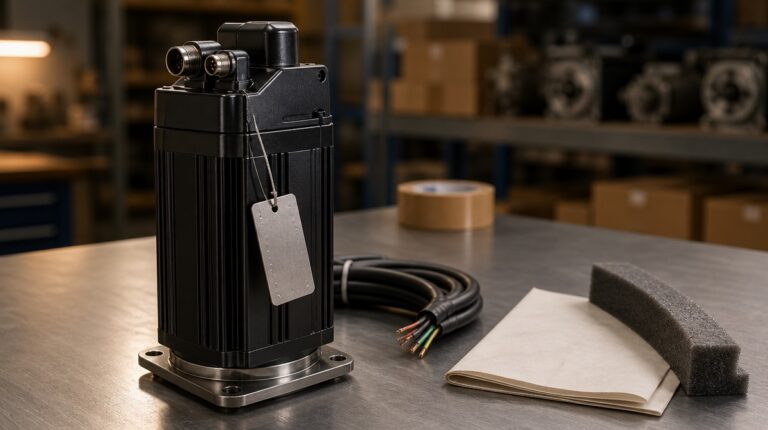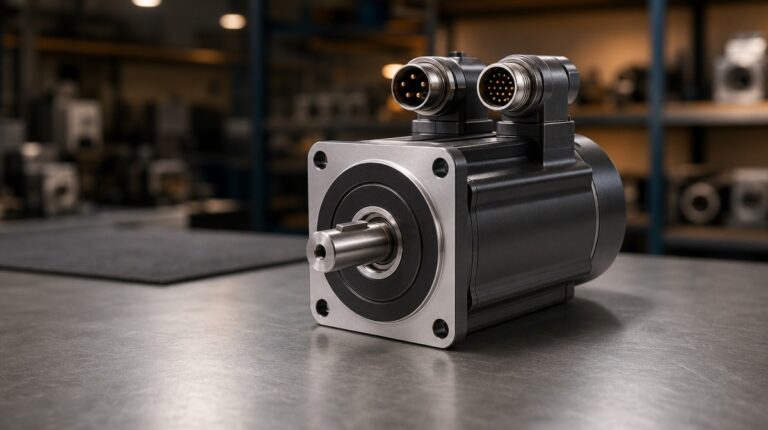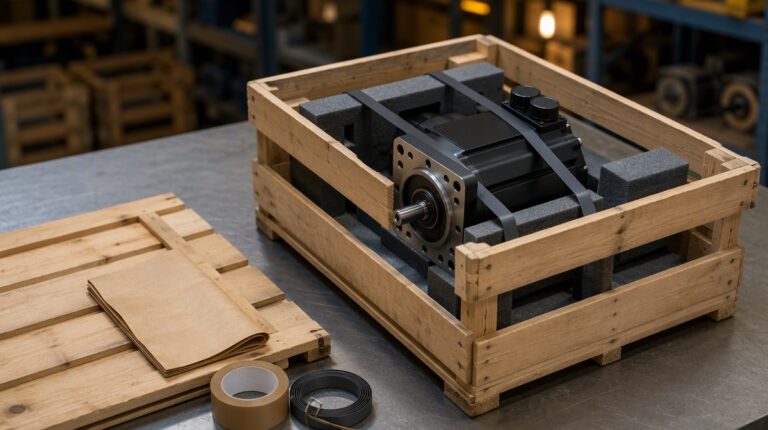

Allen-Bradley MPL-B Servo Motor Repair and Service
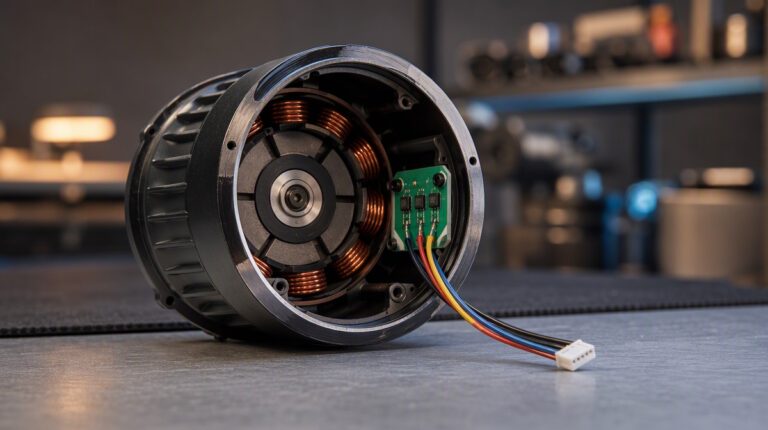
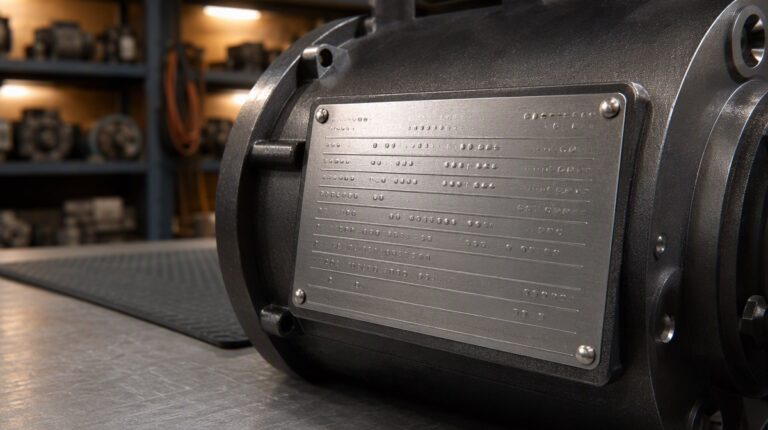
The nameplate on an MPL-B series servo motor carries more information than most people read from it. The motor carries the rest. An MPL-B is a brushless permanent-magnet rotary servo: a stator, a rotor with permanent magnets, a feedback device on the non-drive end, and a shaft carried on bearings. That is the whole machine, and when one fails in service the fault is in one of those parts. A bench can find out which.
This page covers what a repair on this series involves, the faults that most often reach a bench, how to read the catalogue number before anything is sent, and how the repair-or-replace decision is actually made. It is written for the maintenance engineer who is holding the failed motor.
What does a repair on an MPL-B series servo motor involve?
A repair is a sequence of checks, not a single operation. On the bench the unit is stripped and assessed in this order:
- As-received record. Photograph the unit, record the complete catalogue number from the nameplate, and write the fault down exactly as the drive or the operator reported it.
- Mechanical check. Shaft end play and radial play, bearing roughness by hand rotation, shaft runout, housing and flange condition, key and keyway wear.
- Electrical check. Winding resistance balance across the phases, insulation resistance to the housing, and inspection of the winding for overheating or contamination.
- Rotor and magnet check. Condition of the permanent magnets and of the rotor assembly.
- Feedback device check. The encoder or resolver on the non-drive end, its coupling, and its connector. This is where a large share of intermittent drive faults are found.
- Connectors and cabling. Power and feedback connectors, gland condition, and any cable damage that arrived with the unit.
- Reassembly and run. Bearings and seals replaced where the assessment calls for them, with replacement parts matched to the specification of the original, then rotation and electrical checks before the unit is released.
Not every motor needs every step. The findings decide the scope, and the scope is what gets quoted.
What are the usual failure points on an MPL-B series servo motor?
The faults that reach a bench are mechanical about as often as they are electrical:
- Bearing wear. Audible roughness, rising vibration and shaft play. The debris a failing bearing produces can damage the feedback device if the motor is kept running.
- Feedback faults. Drive alarms for position, commutation or encoder loss. Sometimes the encoder itself, sometimes the coupling, sometimes the connector on the feedback cable.
- Winding insulation breakdown. Overheating, moisture or contamination. It presents as a phase-to-phase or phase-to-ground fault, or as a drive that trips on overcurrent.
- Connector and cable damage. Bent pins, a cracked housing, a gland that has been pulled. These produce faults that appear under vibration and disappear on the bench.
- Rotor and magnet damage. Mechanical damage to the rotor, or loss of magnet strength, after an impact or a seized load.
- Contamination. Coolant, oil mist or metal dust inside the housing, which usually explains more than one of the faults above at the same time.
None of these is diagnosed by assumption. Each one has a measurement that confirms it or rules it out, which is why a bench can quote a scope rather than guess at one.
How do you read an MPL-B catalogue number before sending the motor?
The catalogue number, not the brand name, identifies what you have. On Allen-Bradley rotary servos the prefix identifies the series: MPL for the Kinetix MPL low-inertia series, MPM for the Kinetix MPM medium-inertia series, and VPL for the Kinetix VP low-inertia series. Within MPL, the characters that follow encode the frame and winding class and the connector and feedback configuration.
Catalogue designations in this family include MPL-B430P and MPL-B4540F. They are given here as catalogue references only. Our companion guide, how to read an Allen-Bradley servo part number, explains what each segment of the number means.
Before a motor leaves your plant, do two things. Photograph the full nameplate, including any secondary tag, and write the complete catalogue number down exactly as printed. The suffix characters are the difference between a correct match and a motor that will not wire in.
Repair or replace — how is that decided?
Four things decide it, and none of them is the age of the motor:
- Mechanical damage to the shaft, flange or housing. If the frame itself is out of true, the motor will not mount correctly again.
- Whether the feedback device is recoverable. On some variants a failed encoder is a bench repair; on others it is not.
- The winding and insulation condition. A shorted winding needs winding repair, not a component swap.
- Whether the replacement is a true match. The full catalogue number has to line up, including the feedback option.
The call is made after the assessment, not before it, and it is reported together with the findings that drove it.
What should you send with the motor?
Send the motor with as much of the fault context as you have. It shortens the diagnosis:
- the complete catalogue number from the nameplate
- photographs of the nameplate and of the unit as it was removed
- the exact drive alarm or fault text, and when it appears
- what the machine was doing when the fault started
- whether the unit took an impact, a jam, or coolant ingress
Start the review by sending the nameplate and the fault detail on WhatsApp (+91 97866 22233), or through our quote request form. The scope is quoted from what the unit actually shows, not from the description alone.
Which Allen-Bradley motors we inspect, repair and test
We repair Allen-Bradley MPL, MPM, VPL, TL-series and older 1326AB servo motors. Each motor is inspected, repaired, its feedback tested and aligned, and then given a final run test on our universal servo motor test system before it is returned with a test report.
Every repaired motor is run with no load and then under load before it is returned with a test report: see how the load test works and encoder and resolver alignment. For other Allen-Bradley motors, see Allen-Bradley servo motor repair.
Final run test: an MPL motor after repair
What this is not
Star Automations is an independent repair bench. We hold no manufacturer approval for this series, and nothing on this page should be read as a factory statement about it. We work from the motor in front of us, from its nameplate, and from measurements taken on the bench. Where a unit is beyond repair, we say so and report why.
Star Automations has repaired and sourced industrial automation equipment since 2000, and servo motor repair is one of the services we run from our own workshop.
Allen-Bradley MPL-B servo motor repair and service — direct answers
What is an MPL-B series servo motor?
MPL-B is a low-inertia rotary servo motor in the Allen-Bradley range. It is a brushless permanent-magnet motor with a feedback device on the non-drive end, and the B in the prefix is part of the family grouping used when cross-referencing compatible spares.
What are the usual failure points on an MPL-B series servo motor?
Bearing wear, the feedback device and its coupling, winding insulation, connectors and cabling, and the rotor and magnets. Contamination inside the housing often explains more than one of these at the same time.
Can an MPL-B series servo motor be repaired without a factory drawing?
Yes. The motor is measurable without one. Winding balance, insulation resistance, bearing condition, shaft play and feedback output are all checked directly on the bench, and the nameplate identifies the configuration.
How do I identify which MPL-B motor I have?
Read the complete catalogue number off the nameplate and photograph the full nameplate, including any secondary tag. The series prefix alone is not specific enough — the frame, winding and connector characters are what determine the match.
How do I start a servo motor repair with Star Automations?
Send the complete catalogue number, a clear nameplate photograph and the drive fault detail on WhatsApp or through the quote request form. The scope is quoted after the unit has been assessed.
Send the number first, or send the motor
If the unit is already off the machine, start with Priority Technical Review. If it is still running and you are planning ahead, send the catalogue number and the nameplate photograph first. Either way the starting point is the same: the full number, read exactly as printed.