Replace the whole EC module, or repair the board?
The official spare for an EC unit is usually the complete module. That is how the parent sells it, and it is why a failed board becomes a purchase order plus a wait. The question worth answering first is narrower: is the fault in the electronics, and if it is, can the board be recovered?
What is inside an EC module
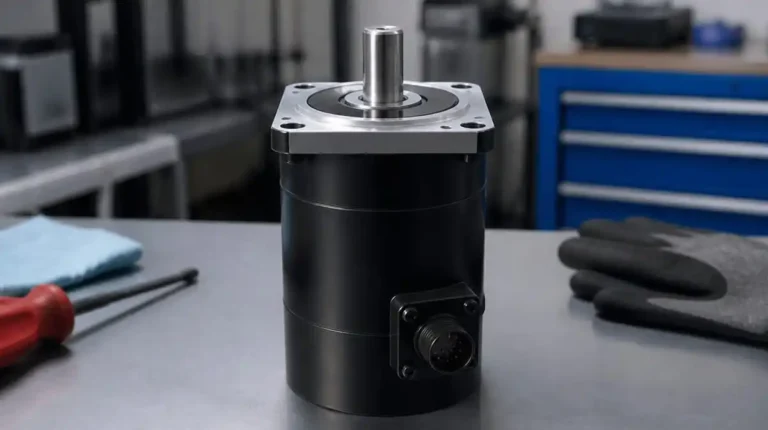
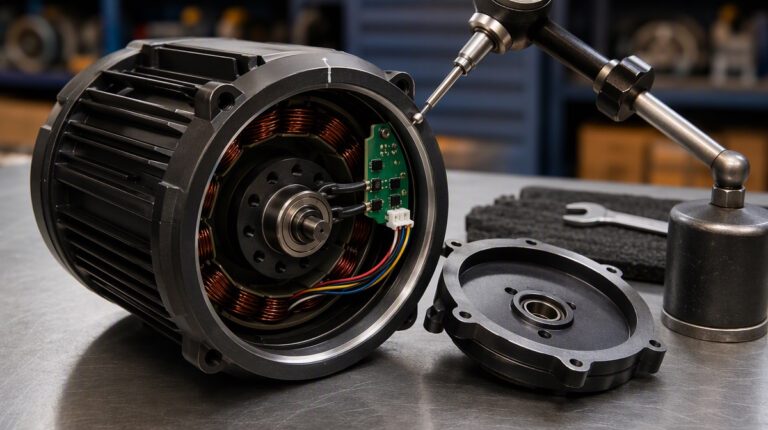
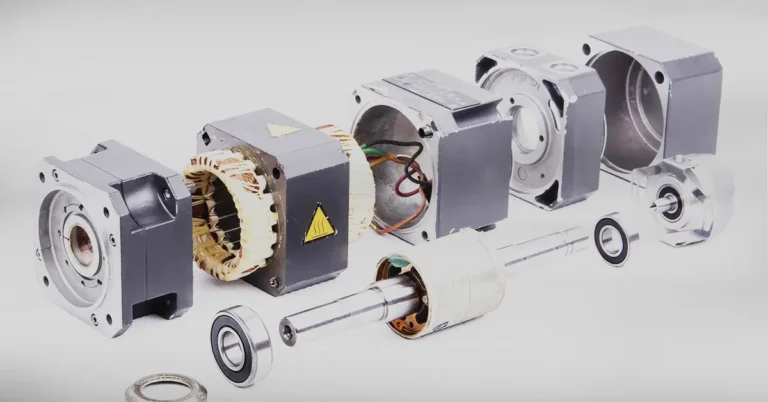
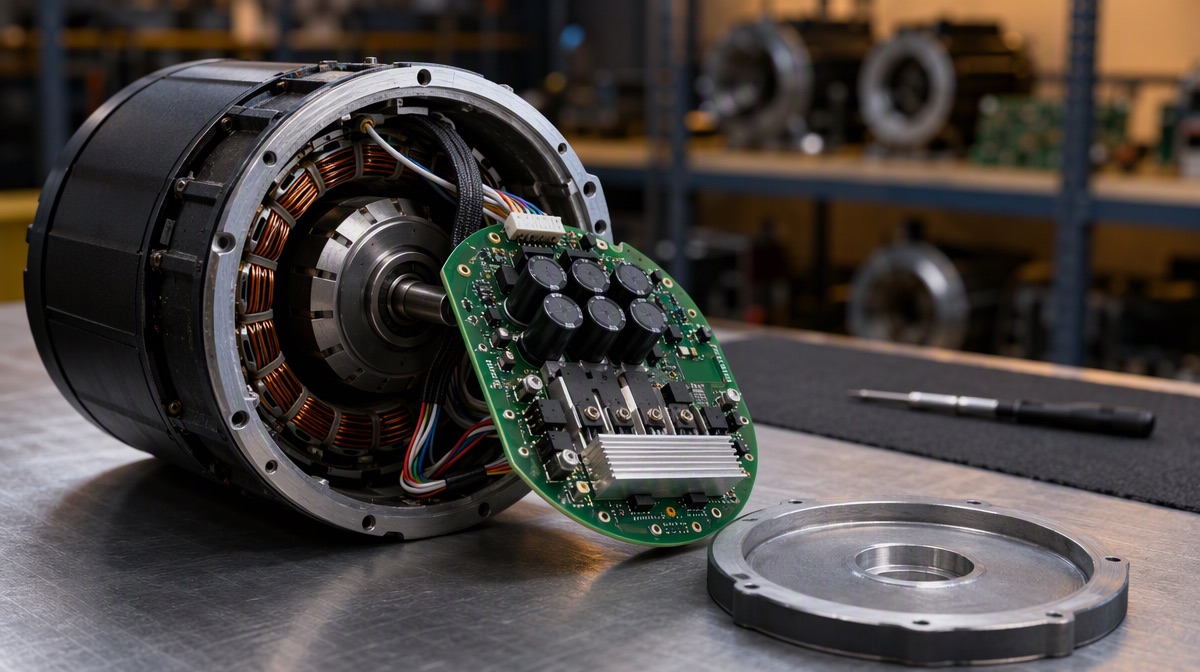
An EC motor takes AC in. The board on the housing rectifies it, holds a DC link, and switches a permanent-magnet rotor. The motor itself — laminations, magnets, bearings — is the other half of the assembly.
That split matters. A failed board and a failed bearing present very differently, and only one of them is an electronics job.
Split the fault before you order anything
Three families cause most of the calls:
- Electronics. Supply, switching, protection, the auxiliary rail. The board is the suspect.
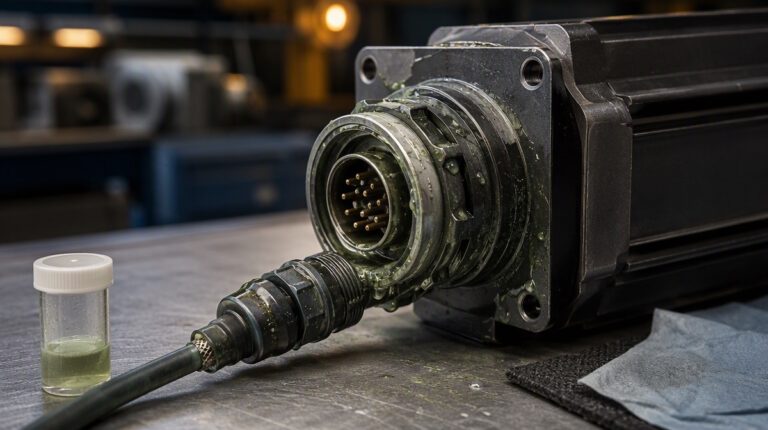
- Bearings. Noise, drag, play at the shaft. A mechanical failure that no board swap will cure.
- Imbalance or damage in the rotor assembly. Vibration, damage to the stack, something the unit may not come back from.
Name which family you are in before a module is ordered. Otherwise a bearing failure gets treated as an electronics failure, or the reverse.
Do not megger an assembled EC module
An insulation test on an assembled EC unit applies voltage to electronics that were never meant to see it. Test the motor side on its own terms, with the board out of the path.
This is one of the few rules on the bench with no exceptions worth making.
When board repair is the wrong path
Repair is not always sensible. Say so early:
- The programmed part cannot be recovered.
- No equivalent component can be proven against the datasheet window.
- The rotor stack itself is damaged.
Those are beyond repair, and calling it that is part of the job. A rebuild that cannot be proven should not leave the bench.
What “ready to go back” means
A module is released on test points, not on enthusiasm:
- Control input accepted
- Current within expectation
- Speed or Hall activity correct
- A mechanical release — no abnormal noise, no drag, no trip
“It spun once” is not a release. A unit that only powers up has proved nothing about commutation.
When the drawing is missing too
Many of these boards arrive with no schematic at all. That is normal in this work, and it does not stop a bench from working — the board still has measurable blocks, and a known-good board of the same revision is the missing reference. We wrote the sequence out in how a bench repairs an EC board without a drawing.
EC module repair — direct answers
What usually fails on an EC module?
The board on the housing — supply, switches, protection — more often than the laminations.
Why do brands ship a complete module?
The parent treats the fan or blower as one spare. That protects the brand. It also creates lead time for the site.
When is board repair the wrong path?
When the programmed part cannot be recovered, when no equivalent component can be proven, or when the rotor stack itself is damaged.
What test means the module can go back?
Control input, current, speed or Hall activity, and a mechanical release — not “it spun once.”
What should we send?
The failed module and, if you have one, a working board of the same hardware revision. Nameplate photographs help.
Send the module, and a good board if one exists
A known-good board of the same revision turns comparison into measurement. Without it, the work is slower but not impossible.
Start with the requirement and nameplate upload through Priority Technical Review, and we will tell you which family the fault sits in, and whether the board is recoverable, before a module is ordered.