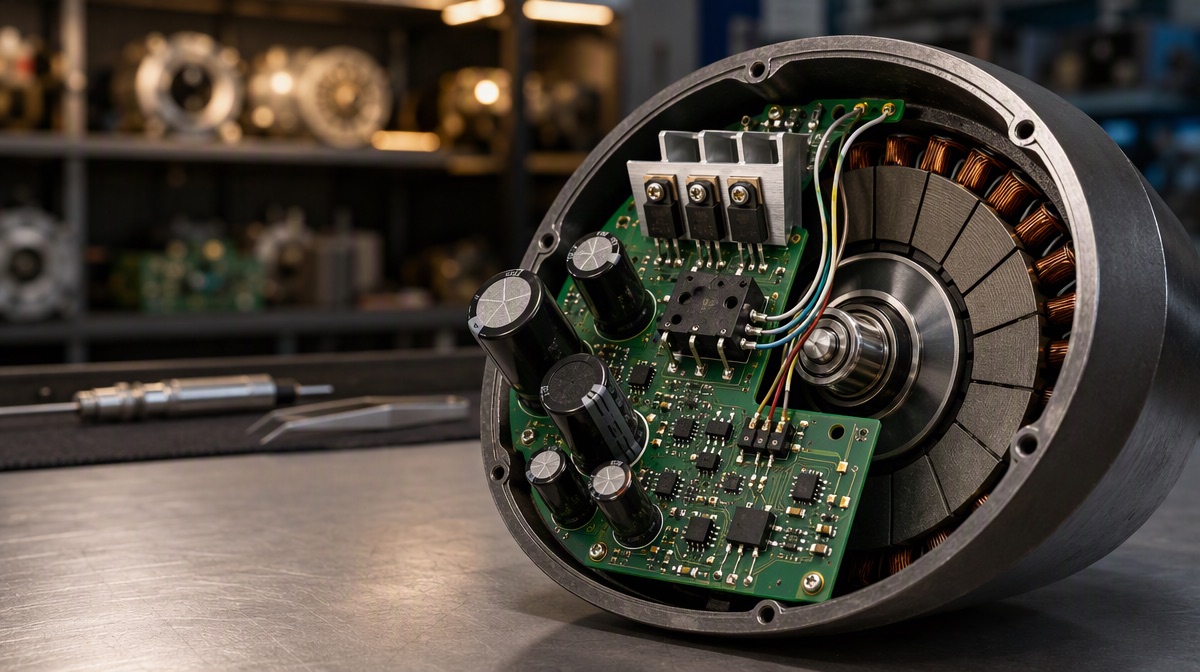
Can you repair an EC motor board without the schematic?
An EC motor is an AC-input, electronically commutated machine. The rotor is a permanent-magnet motor. The board on the housing does the rectification, the DC link, the commutation and the protection. When that board dies, the official path is usually a complete new module. For an SKD brand assembling in India and selling under its own name, that means lead time — and a customer who is already waiting. So the question that lands on the bench is blunt. Without the parent’s schematic, can this board still be made good? Often, yes. Here is how we decide.
What “EC” means on the bench
EC, or electronically commutated, means mains AC comes in and electronics commutate a permanent-magnet motor. The board is the difference between this machine and a plain induction motor.
BLDC is the same topology, usually supplied with DC instead of mains AC.
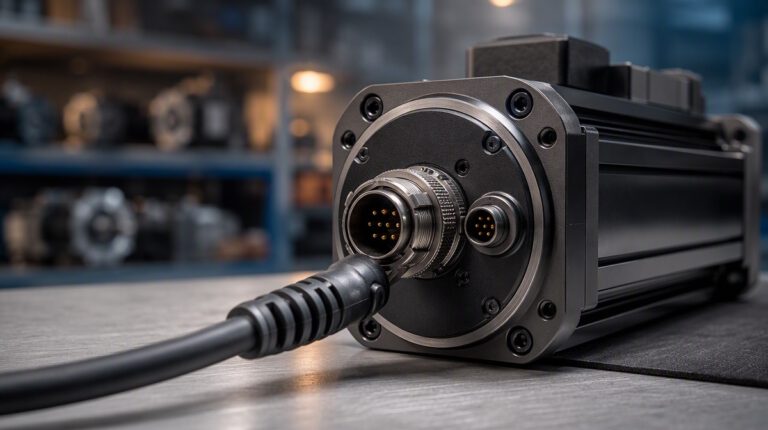
Brushless servo is the same family with higher-resolution feedback and a drive. We handle that side of the bench too — see servo motor repair.
EV traction electronics is a related power stage on a different duty cycle. The board skills overlap. We make no claim about vehicle-level certification.
The repair problem is the electronics plus the feedback alignment — not the idea of a motor.
Why SKD after-sales gets stuck
The pattern repeats across brands, so it is worth naming plainly:
- The parent ships a complete module, not a board.
- Schematic and firmware stay with the parent.
- Spare capacitors, gate drivers, Hall sensors and auxiliary supplies are not in the local kit.
- After a board swap the rotor must still commutate — Hall or encoder alignment is its own job.
- Reassembly without a release test puts a weak unit back in the field.
None of these are anyone’s fault. They are the shape of an SKD arrangement. But they leave the after-sales desk holding a failed unit, a waiting customer, and a part number that only comes as a whole assembly.
Without a schematic, what is actually possible
Possible. Locate the failed stage with in-circuit measurement. Compare the failed board against a known-good board of the same layout. Replace discrete parts that test out of tolerance. Then prove the board on a functional load before it ever meets a rotor.
Not possible. Guessing the behaviour of a programmed controller. Cloning locked firmware. Promising that every layout from every factory can be recovered — we cannot know a board we have never seen.
Some boards are BER. Beyond economic repair is a real outcome, and you hear it early, before anyone spends on a rebuild.
How the bench actually works
The sequence matters more than the equipment. This is the order we work in.
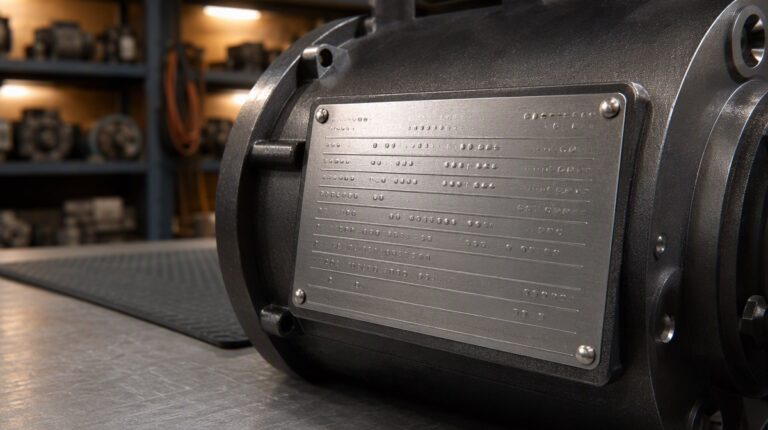
- Incoming. Photograph the unit, record the nameplate data, map the connectors, and write down the fault as received. Do not megger an assembled EC module — that is not a safe first move on a unit with electronics fitted.
- In-circuit test on the PCB. Check the rails, gate drive, current sense, auxiliary supply, and comms where the board has them. This narrows the fault to a stage before anything is desoldered.
- Compare against a known-good board of the same revision. Look for voltage and signature differences between the two. This is a measurement exercise, not “swap all the parts and see”.
- Component work. Capacitors checked on ESR and value, power semiconductors, drivers, sense resistors, Hall elements. Replacements go in at equivalent specification — not the cheapest lookalike that fits the footprint.
- Sourcing. Obsolete and long-lead discretes come from identified equivalents. If equivalence cannot be proven, we stop and say so rather than fit a part we cannot stand behind.
- Feedback. Hall-sensor alignment to the magnet and the commutation sequence, once the board is live. A board that powers up but sits out of alignment will run rough or trip.
- Functional test on the assembled module. Control input at 0–10 V or the bus the unit actually uses, speed points, current, tacho or Hall activity. Release only if those points pass.
- Documentation. What failed, what was replaced, what was measured. The brand owner keeps the customer relationship and the scrap-or-reuse decision.
What this is not
We are an independent repair bench. We hold no factory authorisation, no manufacturer appointment, and no franchise on anyone’s name.
This is not laptop or general IT repair.
And it is not a promise that every EC board is recoverable. Some are BER, and we will tell you that.
EC motor board repair — direct answers
What is an EC motor in repair terms?
An electronically commutated motor takes AC mains into a board that rectifies, holds a DC link, and switches a permanent-magnet rotor. Field failure is often that board, not the laminations.
Can you repair the board if the manufacturer will not give you a schematic?
Often yes, for discrete power and supply faults, by in-circuit test and comparison with a known-good board of the same layout. Programmed or locked parts, and boards with no golden sample and no measurable signature, may be beyond repair.
Why is Hall-sensor alignment part of the repair?
Commutation depends on rotor position. A repaired board that is live but misaligned will draw wrong current, vibrate, or trip. Alignment is checked after the electronics are proven, not instead of that proof.
Do you replace the whole module or the failed parts?
Failed parts on the board where they can be identified and sourced as equivalents. The complete module is the fallback when the board is BER or the firmware cannot be recovered.
What should we send for a first look?
The failed module as received, the fault description, and — if you have one — a working board or module of the same hardware revision. Nameplate photographs help. We report what is repairable before any rebuild.
Send the failed module, and a known-good board if you have one
If you run after-sales for an SKD brand, the useful first step is simple. Send the failed module with the fault as you received it. If a working board of the same revision exists in your stock, send that too — it turns the comparison into a measurement instead of a guess.
Start the requirement and nameplate upload through our Priority Technical Review. We will tell you what is repairable before any rebuild begins, and where a board is beyond economic repair we will say that plainly.