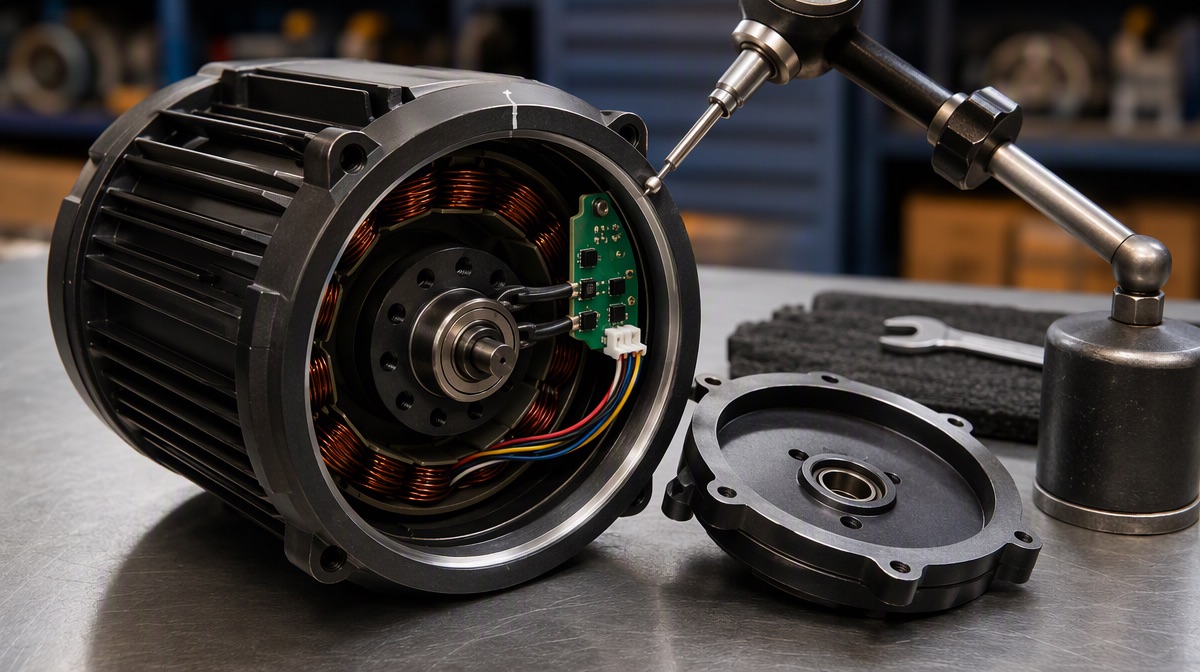
The board is live. The motor still vibrates. Is that Hall alignment?
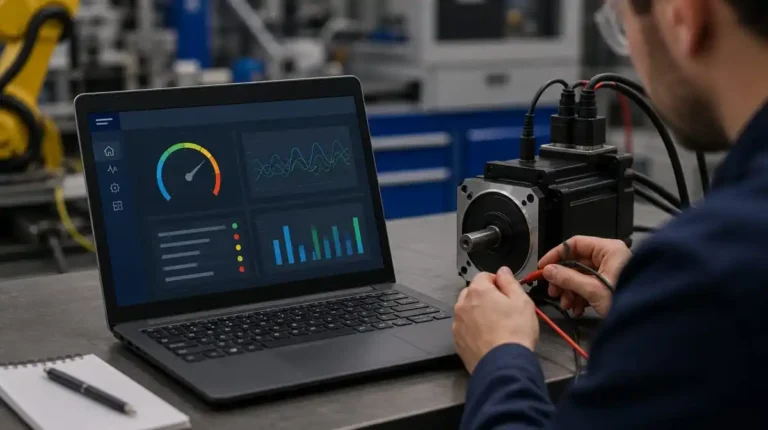
The board powers up. The motor turns. It also vibrates, and the current looks wrong on the meter. A repaired board is not the same thing as an aligned machine — and those two conditions are checked at different points in the job.
Live is not aligned
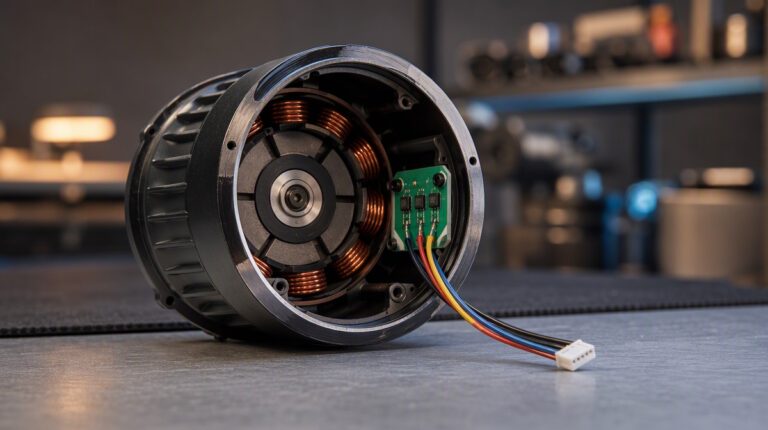
A board that is electrically sound can still switch at the wrong moment. Commutation depends on knowing where the rotor is, and the sensor information has to line up with the rotor position for the machine to run properly.
Powering up proves the board. It proves nothing about alignment.
What a wrong commutation map looks like
- Current ripple that should not be there
- Noise and vibration at speeds where the machine was previously smooth
- Heat building faster than the load explains
- Trips that appear to come from nowhere
None of those are a reason to reopen the board. They are a reason to check the timing between the electronics and the rotor.
Vibration is more than one family
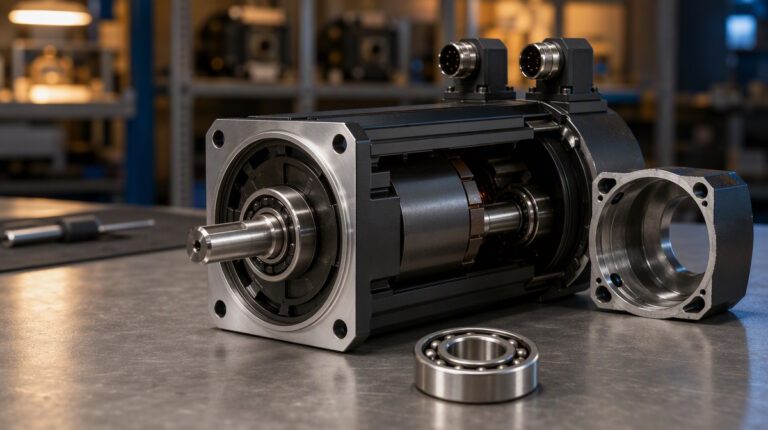
Rough running after a board swap gets blamed on the board, and it gets blamed on the bearings. Both are possible, and they are different faults:
- Mechanical — imbalance, bearing wear, runout at the shaft.
- Electrical timing — a commutation sequence that does not match rotor position.
Split them on the bench. A hand-rotated shaft that feels smooth while the machine vibrates under power points to timing, not to bearings.
Alignment comes after proof
The order is not negotiable. First prove the electronics, then set the alignment.
Aligning a board that has not been proven leaves you with two variables and no way to separate them. If the machine then runs badly, you cannot tell whether the fault is the repair or the setup.
Do you need the original drawing?
Often not. A known-good module of the same revision gives you the comparison directly, and on many layouts the commutation sequence can be measured rather than looked up.
Some units still stop at beyond repair. A locked or unrecoverable programmed part does not become repairable because the alignment question is well understood.
The Hall map is the usual suspect
When the timing is wrong, the Hall information is where we start. We wrote the sensor side out separately in why a BLDC motor locks and heats when a Hall sensor fails, and the board-level comparison method in how a bench repairs an EC board without a drawing.
Vibration after a board swap — direct answers
Why would a repaired board still run rough?
Commutation depends on rotor position. The board can be electrically good and still switched at the wrong angle.
Is vibration always a bearing?
No. Imbalance and bearings are one family. Wrong Hall map is another. Split them on the bench.
When is alignment done?
After the board is proven live, not instead of that proof.
Do we need the original drawing to align?
A known-good module of the same revision, or a measured commutation sequence, is enough in many layouts. Some units still stop at BER.
What should we send?
The module as it runs now and a note that the board was already changed. A good unit of the same revision shortens the compare.
Send it as it runs now
A module that has already been worked on is easier to assess when we can see it in its current state. Tell us the board was changed, and whether a good unit of the same revision is available for comparison.
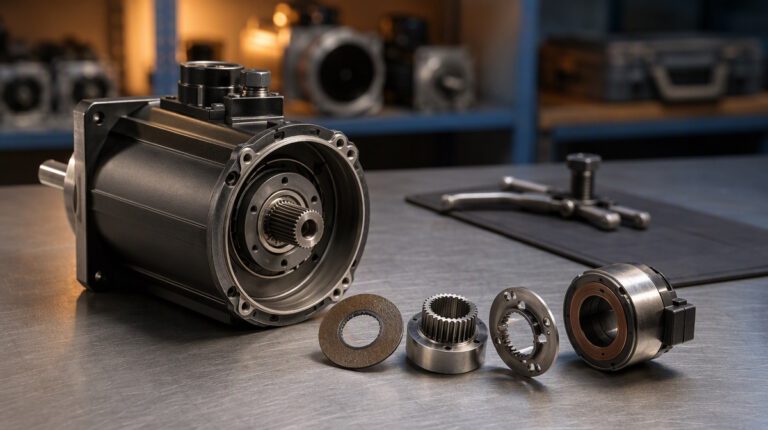
Start with the requirement and nameplate upload through Priority Technical Review. Alignment work sits on the same bench as our servo motor repair work, so the mechanical and electrical checks happen in one place.