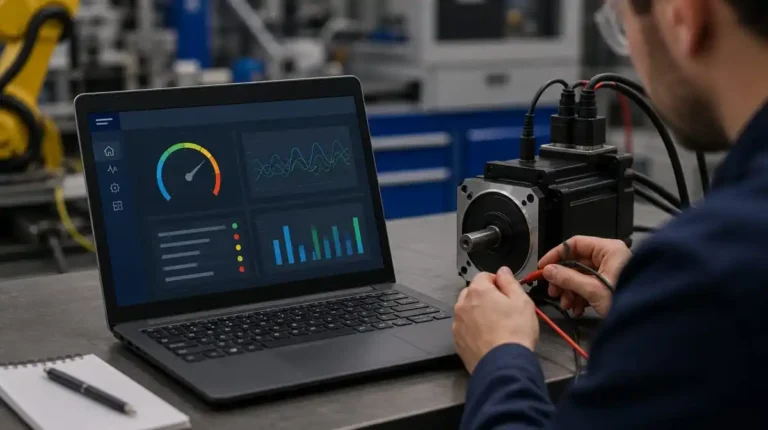
The encoder is in alarm. The motor still turns. Do you replace the motor?
The drive is in a position alarm. The shaft still turns by hand. Those two facts are not a contradiction, and they are the reason a motor should not be condemned on an encoder alarm alone. A feedback fault and a winding fault look similar on the HMI and behave nothing alike on the bench.
What the alarm actually reports
A following-error or position-deviation alarm means the drive lost confidence in where the rotor is. It is a statement about position feedback, not about the copper.
So the first question is not “is the motor bad”. It is “which part of the feedback chain stopped telling the truth”.
Hand rotation is the first split
Lock out, isolate the axis, and turn the shaft by hand.
A shaft that turns freely and smoothly points away from a winding failure and away from a seized bearing. A shaft that drags, grinds or locks points somewhere else entirely — and that is mechanical work, not an encoder problem.
Where the fault usually sits
The feedback path is longer than most people assume. Work outward from the motor:
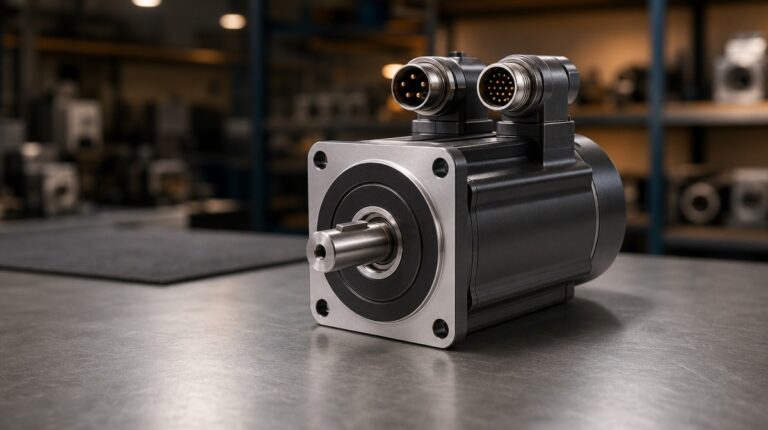
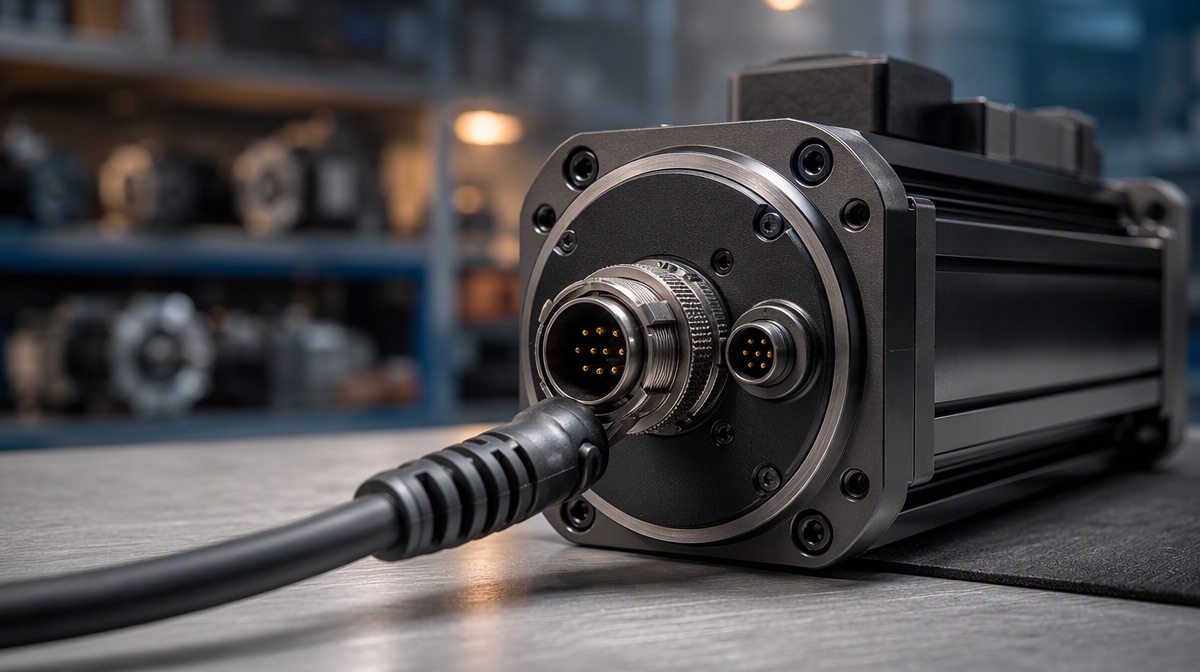
- The feedback connector — contamination, pushed pins, a shell that has taken a hit
- The cable — a cracked conductor or a broken shield that only fails at one axis position
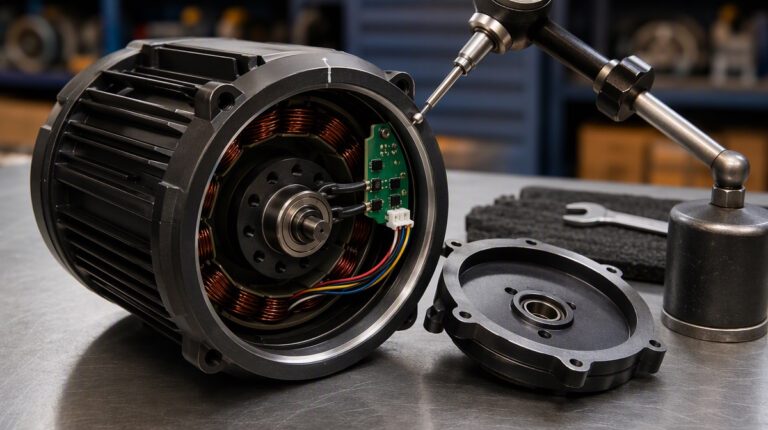
- The encoder itself — disc contamination or a failing output stage
- The drive’s feedback input channel
That middle item is the one that wastes the most time. A cable fault behaves like an encoder fault, and no amount of motor swapping fixes it.
Wiggle the cable, watch the display
With the machine locked out and the drive powered for monitoring, move the axis through its range and flex the cable where it leaves the motor and where it enters the cabinet.
An alarm that appears at one position and clears at another is telling you the fault is physical and intermittent. Coolant sitting in a connector behaves the same way — it fails at the angle where the liquid reaches the pins.
Encoder disc versus winding
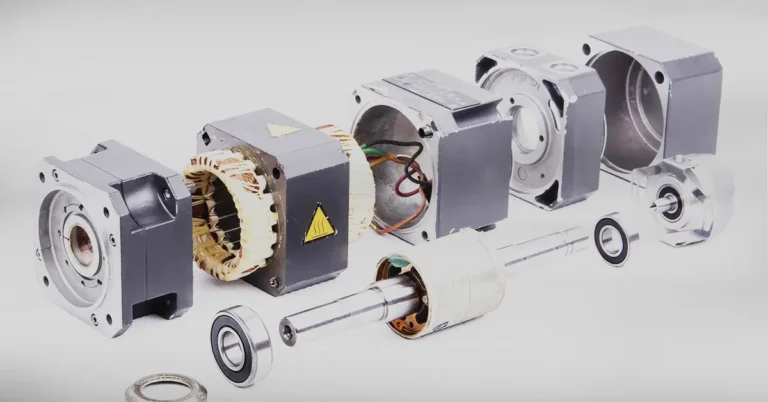
When the fault is not obviously cable, split the motor side into its two halves:
- Winding check. Phase-to-phase balance and insulation to frame. Basic, quick, and it settles whether the copper is involved.
- Feedback check. Signal integrity and output behaviour from the encoder, assessed on the bench.
Do that split before anyone orders an axis. A new motor does not fix a damaged cable, and a new encoder does not fix a shorted winding.
Do not swap units at random
Corrupt feedback can command overcurrent or violent motion. Isolate the feedback channel before swapping either the motor or the drive, and keep the axis mechanically safe while you do it.
Random swapping is how a single feedback fault becomes two damaged units.
Encoder alarms — direct answers
Can a servo show an encoder alarm if the motor windings are good?
Yes. The drive reports lost or noisy position. The shaft can still turn freely.
What should be checked before replacing the motor?
The feedback connector, the cable shield, whether the shaft turns by hand, and a basic winding check.
Why do these faults look intermittent?
Coolant in a connector or a cracked conductor often fails only in one axis position.
Can a bad encoder damage the drive?
Corrupt feedback can command overcurrent or violent motion. Isolate the channel before swapping either unit at random.
What should we send?
Nameplate photos, the alarm text, and whether the shaft still turns. The motor as received if you want a bench split of encoder versus windings.
Send the alarm text, not just the motor
The alarm text tells us which part of the feedback chain the drive stopped trusting. The shaft note tells us whether the mechanical side is even involved. Together they usually save a wasted axis purchase.
Start with the requirement and nameplate upload through Priority Technical Review. If the fault lands on the motor side, the same bench that does our servo motor repair work will split encoder from windings before anything is replaced.