Obsolete Industrial Automation Part? Repair, Replace or Source — How to Decide
Every obsolete part starts the same way: it fails, and the maintenance team discovers that the OEM stopped making it years ago. What looked like a straightforward spare-part order becomes a decision with three very different paths — repair what you have, replace it with something current, or source the original from somewhere in the world that still has it.
None of those paths is right in every case. The mistake is choosing one before you have the facts that matter. This article walks through the decision in the order it should actually happen, and ends with what to send us when you want a second opinion.
Start with the part number, not the panic
The single most important step is also the most boring one: confirm exactly what the part is. A servo drive model that ends in one letter different can change the replacement options completely. A PLC that looks identical to another revision may use different firmware or a different power supply.
Read the nameplate or the engraved part number twice. Note the brand, the exact model string, the serial number if visible, and any date or revision codes. If it is a module inside a panel, check the rack, the backplane and the surrounding wiring — knowing which unit failed matters as much as knowing the part number, because some failures are really cabling or supply problems wearing out a healthy part.
This is also the moment to confirm which machine the part belongs to and how the machine is used. A discontinued drive on a production-critical line deserves different thinking than the same drive on a rarely used standby machine.
Can it be repaired? Can it be replaced?
Ask both questions before you commit to either answer, because they feed each other.
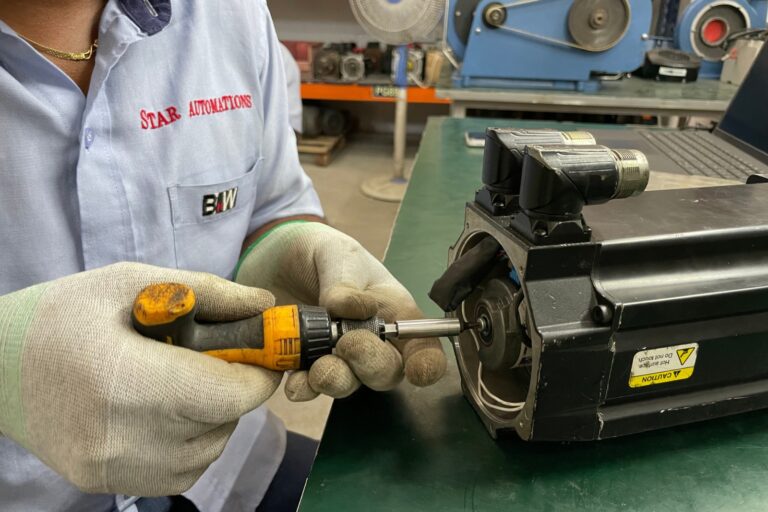
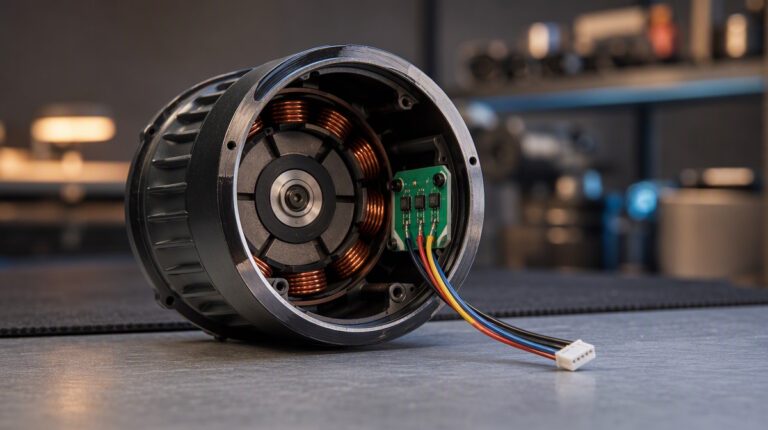
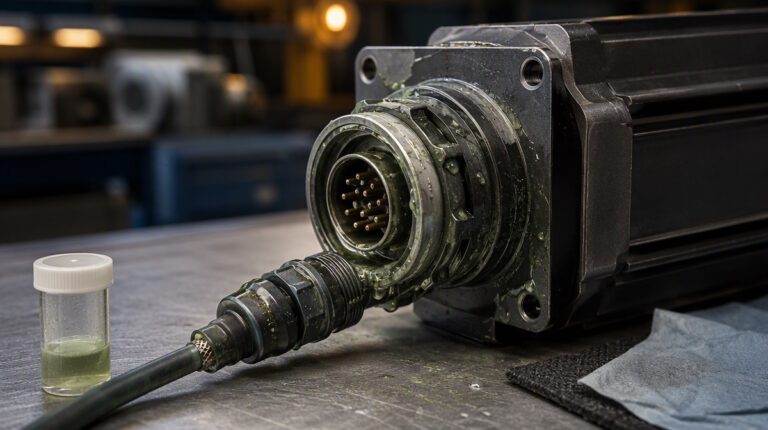
Repair is technically practical for many failures — worn bearings, failed capacitors, blown power stages, damaged connectors, dead fans. It becomes less practical when the failed part is no longer obtainable even as a component, when the board has suffered damage that cascades, or when the cost of repair approaches the cost of a dependable replacement. Nobody can tell you which situation you are in from a phone description alone; the part has to be evaluated, and in many cases tested, before anyone can promise a repair will hold.
A direct replacement exists when the manufacturer still lists the model or a genuine successor, or when a verified cross-reference matches the original specification. That is the simplest outcome — but only when the replacement is a true match, not a close guess. On discontinued lines such as older servo families, the successor often needs a different feedback connector, different tuning parameters or a different wiring scheme. The line between “direct replacement” and “migration project” is where many budgets go wrong.
Sourcing: when keeping the machine unchanged wins
If the machine cannot be redesigned right now — and for many plants that is the honest situation — sourcing the original part is often the least risky path. A production line that runs well with a discontinued PLC or an old servo drive does not need a migration; it needs to keep running.
Sourcing obsolete stock is a genuine industry in itself. Original units still surface from distributors, decommissioned plants, and specialist inventory holders, and verified suppliers will test what they sell and state the condition clearly. The catch is availability and condition: an obsolete part can take longer to find, and you are buying from whatever exists rather than from a production run. That is why sourcing decisions should never wait until the machine is down.
The real comparison: downtime, lead time, risk and total cost
Compare the three options on four measures — not on price alone.
Downtime. If the machine must run continuously, speed of return matters more than any other factor. That tends to favour repair or sourcing an immediately available unit over a carefully planned migration.
Lead time. Repair depends on parts and workload at the repair shop. Sourcing depends on what exists in the market. Replacement depends on the OEM and whether installation is a straight swap or a project. All three carry uncertainty — anyone who quotes a fixed delivery window without knowing the specific part is guessing.
Risk. Repair carries the risk that the same fault returns. Sourcing carries the risk of buying a used part with hidden wear. Replacement carries the risk of compatibility surprises and the cost of recommissioning. Weigh them against how bad each failure would be for your operation.
Total cost. The invoice is only the start. Count installation, commissioning, downtime during the change, and the expected remaining life of each option. A cheaper repair that fails in six months is more expensive than a costlier one that runs for years.
How the decision usually lands
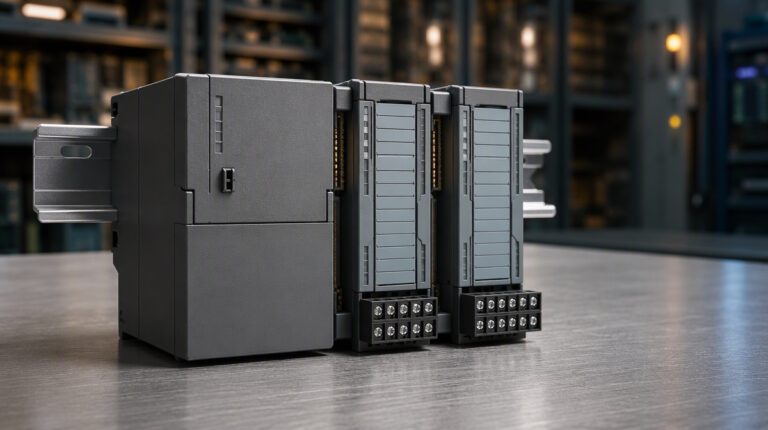
Repair tends to win when the machine is not changing, the fault is a known repairable type, and the alternative is a migration you are not ready for. Servo drives and PLCs from discontinued families are repaired every day, precisely because replacing them means touching a system that currently works.
Replacement tends to win when the model is still current, when a genuine successor is a verified match, or when the part has failed badly enough that repair costs approach replacement and the machine will keep running for years. New equipment also brings a fresh service life, which matters on production-critical axes.
Sourcing makes sense when the original is discontinued but still findable, the machine cannot be modified without major cost, and you want identical behaviour and wiring. It is also the pragmatic choice when you need a spare for a machine you intend to migrate later — run the old line on sourced spares while you plan the change on your own schedule.
A concrete example from our own catalogue: the Yaskawa SGDM and SGDH servo drives are discontinued families with a large installed base still running. For plants on those drives, [repair is often the fastest route back to production](https://starautomations.com/shop/yaskawa-sgdm-sgdh-servo-drive-repair/), and a straight repair beats a migration when the machine is otherwise healthy. On the PLC side, Rockwell discontinued the SLC 500 line and its final units left production in 2024 — so when a plant needs a [1747-series processor spare today, sourcing the original](https://starautomations.com/shop/slc-500-1747-l551-processor-sourcing/) is frequently the answer while the migration decision waits.
The decision logic is the same across brands and part families: identify exactly what you have, check repair practicality, check for a verified replacement, and only then decide between them with sourcing as the option that keeps your machine unchanged.
What to send when you ask for help
The faster you give us the right information, the faster we can tell you which path is realistic. For any obsolete or hard-to-find part, send:
• The brand and the exact part number or model from the nameplate — a clear photo of the nameplate is best.
• The equipment it belongs to and the machine type.
• What happened: fault code, alarm, symptom, or sudden failure.
• Whether the machine is down or still running.
• Any manual or cross-reference you already have.
That is enough to start a repair evaluation, a replacement review or a sourcing search. If you are unsure which of the three you need, say so — that is exactly what our [Ask Star](https://starautomations.com/ask-star/) technical desk and the team behind it are for.
Obsolete parts: the questions we are asked most
Can obsolete industrial automation parts be repaired?
Usually yes, when the failure is in a repairable component and the repair shop can obtain the replacement parts or rebuild them. Bearings, power stages, capacitors, connectors and feedback devices are routinely replaced on discontinued drives, motors and controllers. The practical limit is reached when the failed component itself is no longer obtainable or the damage has spread beyond economical repair — which is why an evaluation matters before anyone promises a repair.
Should an obsolete servo drive be repaired or replaced?
Repair first if the machine is otherwise healthy, the fault is repairable, and you are not ready for a migration. Replacement makes sense when a verified successor exists or the drive has failed repeatedly. The deciding factors are usually downtime, the remaining life you expect from the machine, and whether the wiring and feedback scheme can stay untouched.
Can discontinued industrial parts still be sourced?
Yes, in many cases. Discontinued models continue to surface through specialist stockists, surplus inventories and decommissioned plants, and responsible suppliers verify the condition of what they sell. Sourcing takes longer than ordering from a current catalogue and depends on what exists in the market, so the practical rule is to start the search before the machine is down.
What information is needed for a repair or sourcing quote?
The brand and exact part number from the nameplate — a photo helps — plus the machine type, the fault or alarm if there is one, and whether the equipment is down. With those details we can tell you which path is realistic and what the next step costs; without them, any quote is guesswork.
Need help with an obsolete or hard-to-find automation part? Send the part number, model or nameplate to [Star Automations via Ask Star](https://starautomations.com/ask-star/) for:
• repair evaluation
• replacement review
• sourcing support
If you would rather look first, browse the [shop](https://starautomations.com/shop/) for verified inventory. Either way, start with the part number — the rest follows from that.