Out of warranty: keep the brand, send only the failed module.
Out of warranty, the factory usually offers one thing: a complete spare. For a brand owner, that means buying the whole assembly when a board or a feedback device failed. A repair-return lane exists for that gap — and it works without taking the customer away from the brand.
The after-sales problem
When a brand assembles imported modules and sells under its own name, after-sales sits with the brand. The parent supplies the module, not the service relationship.
So a failed unit becomes a decision the brand owner has to make in front of their own customer: a complete spare on the factory’s timing, or a repair route that keeps the unit moving. That pressure is where a repair-return lane earns its place.
The workshop does not take your customer
This is the part worth stating plainly. The end customer belongs to the OEM or brand owner. The workshop repairs a unit and returns it — it does not step into the relationship, does not quote the end user, and does not position itself as the brand.
That is the whole point of the lane. It supports the brand’s after-sales, it does not compete with it.
No rebrand
A unit that goes out through this lane comes back as the same branded module it arrived as. Nothing is re-labelled, nothing is presented as something it is not, and nothing enters the open market as a substitute part.
The identity of the unit stays with its owner.
Scrap-or-reuse stays with the owner
When a board is beyond repair, the report says so — and the decision that follows belongs to the brand owner. Reuse, scrap, or replace is their call, made on their customer relationship and their commercial position.
We report the condition. We do not make the commercial decision.
What a return actually includes
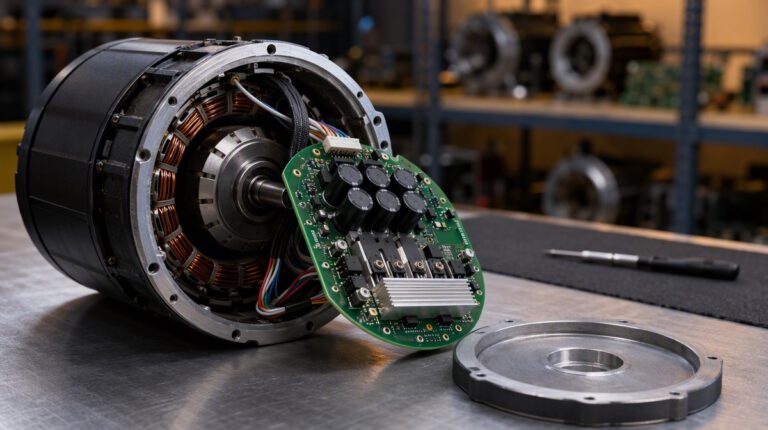
- Electronics. The failed stage identified and worked to published assembly practice.
- Rotor and feedback. The mechanical side checked and, where relevant, aligned.
- A release test. The unit proven on control input, current and rotation — not released on a power-up alone.
- A report. What failed, what was replaced, what was measured.
Same serial where the unit is recoverable, or a clear beyond-repair statement where it is not.
We are an independent bench
To avoid any confusion: we are an independent repair bench. We hold no factory authorisation and no manufacturer appointment, and we make no claim to one.
What we offer is paid repair-return of failed modules, under the owner’s brand and the owner’s decision.
OEM repair-return — direct answers
Are you an authorised centre for the manufacturer?
No. We are an independent bench, and this is paid repair-return of failed modules under the owner’s brand and decision.
Who keeps the end customer?
The OEM or brand owner. The workshop does not step into that relationship.
What comes back?
The same serial, or a clear BER report, plus what was measured. Not a grey unit on the open market.
What modules fit this lane?
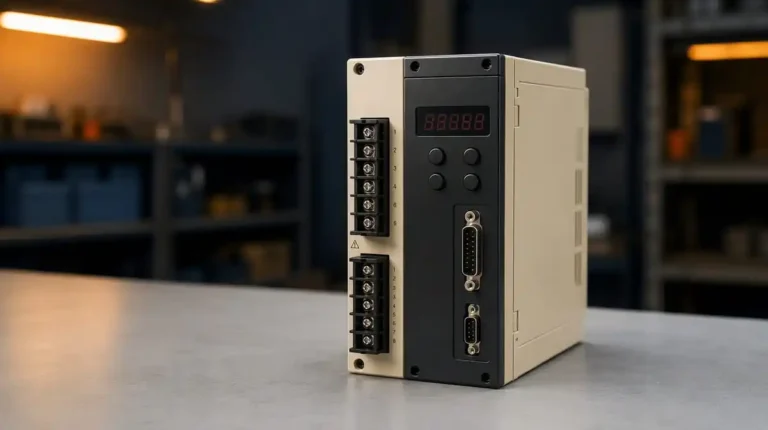
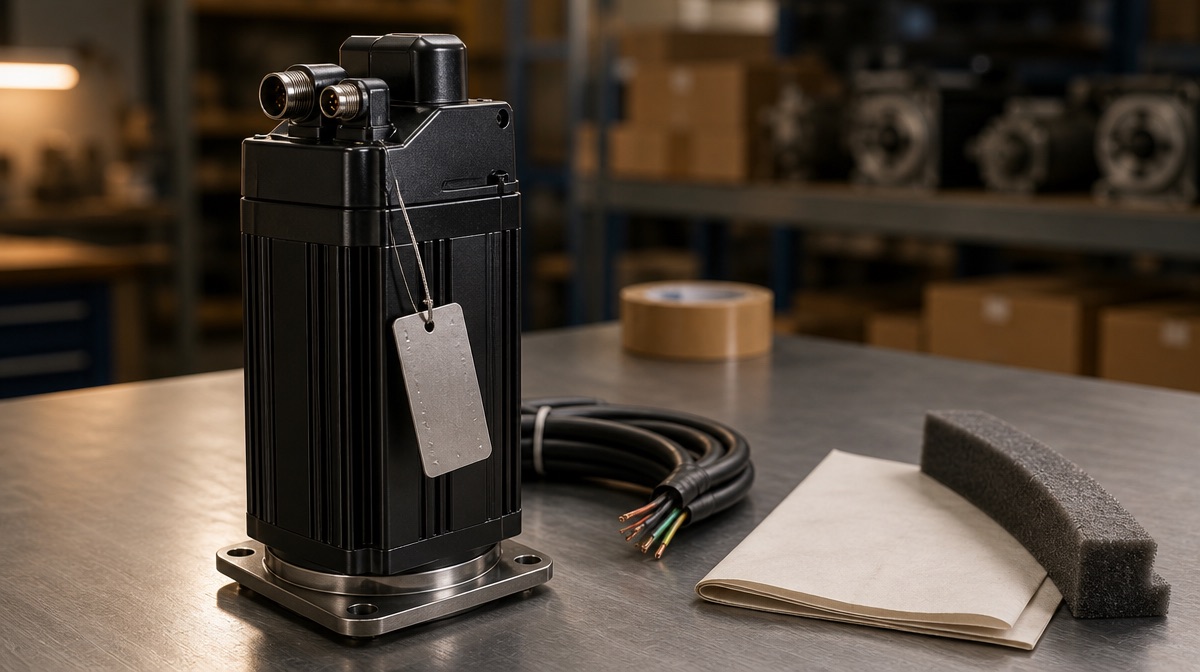
EC and BLDC electronics modules, servo motors and their feedback, and power boards where the fault can be isolated.
What should we send?
A handful of failed units, the fault list, and the test method you need on the report.
Send the units and the report format you need
If your after-sales process needs a particular test method documented, say so up front. A report written to your format is more useful than a repair note written to ours.
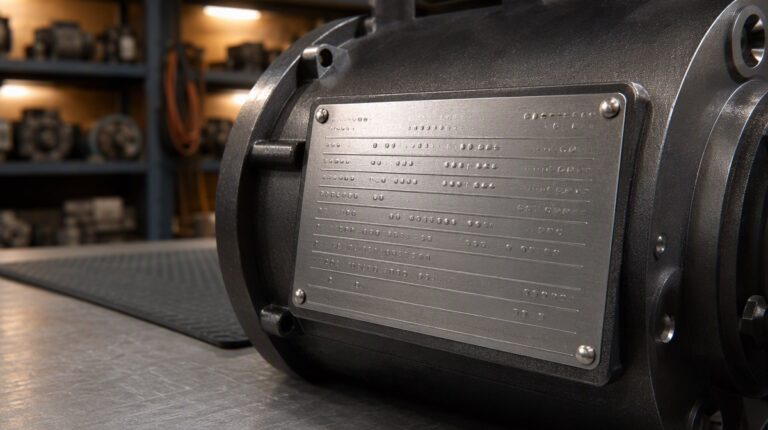
Start with the requirement and nameplate upload through Priority Technical Review. Module-level recovery runs alongside our servo motor repair work, so a mixed batch travels through one process.