Servo overcurrent: shorted winding, jammed axis, or the drive?
An overcurrent alarm arrives looking like a verdict on the motor. It is not. A shorted winding, a jammed axis, a brake that will not release and a failed power stage in the drive all push current the same way, and they are fixed by different people.
An OC alarm is not a rewind order
The drive is reporting that current went somewhere it should not have, or rose faster than it should. That is all it says. It does not say the copper is burnt.
Renewing a motor that was mechanically overloaded repeats the failure and adds an invoice.
First: mechanical, under lockout
Lock out and isolate the axis. Then take the load out of the picture if the machine allows it, and turn the shaft by hand.
- Free and smooth — the mechanical path is probably not the whole story.
- Dragging or grinding — a bearing or a jammed load is in the picture.
- Will not turn at all — stop. Diagnose the mechanical fault before power is applied again.
Drag on a hand-turned shaft is not a winding diagnosis. It is a mechanical finding, and it stands on its own.
Second: the brake
A brake that does not release makes the motor fight itself. Current climbs, the housing heats, and eventually the drive trips — and the winding looks guilty because it is the part carrying the current.
On a vertical axis, check the brake before anything else. Confirm it releases when commanded, and that it holds when the axis is dropped.
Third: insulation and phase balance
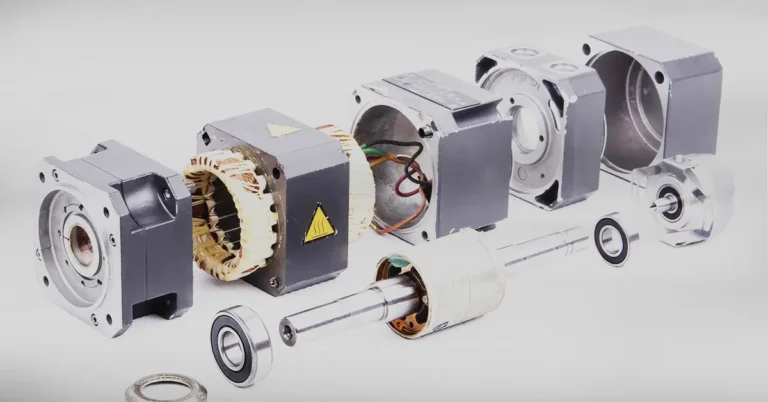
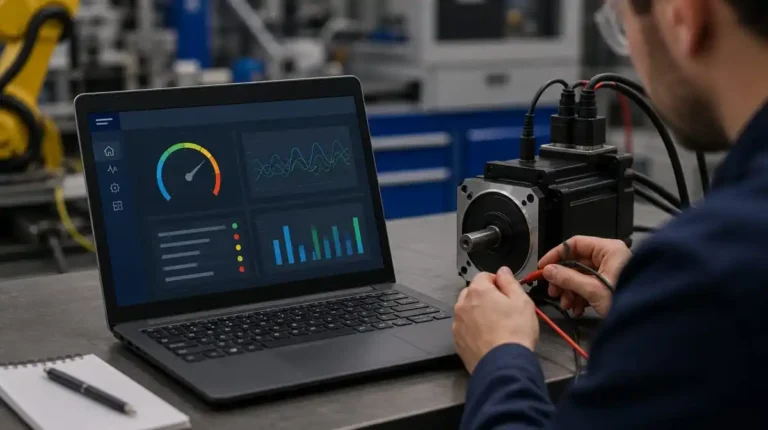
Once the mechanical side is either cleared or known, move to the electrical side of the motor.
- Phase-to-phase balance, to see whether the windings match each other.
- Insulation to frame, to see whether the winding is holding off where it should.
This is the check that separates a genuine winding fault from an overload the winding survived. The two produce similar alarms and different measurements.
Fourth: the drive power stage is its own suspect
When the motor hand-rotates, the windings compare, and the trip happens at enable, the power stage may already be shorted. A shorted device in the drive produces exactly the current signature the alarm is reporting.
Do not treat the drive as an innocent bystander, and do not treat it as the first suspect either. It has a position in the order.
Do not rewind first
A rewind on a motor that was dragged mechanically repeats the failure as soon as it is loaded again. Do the split, then decide.
Equally, a motor with a genuine winding fault and a worn bearing should have both addressed. Repairing one and ignoring the other returns the unit to service twice.
Servo overcurrent — direct answers
Does overcurrent always mean the motor is burnt?
No. A seized bearing, a brake that will not release, or a jammed load can push current just as hard.
What is the first mechanical check?
Isolate the load if you can and turn the shaft by hand. Drag or grinding is not a winding diagnosis.
When is the drive the suspect?
When the motor hand-rotates, windings compare, and the trip happens at enable — the power stage may already be shorted.
Should we rewind first?
Only after the split. A rewind on a mechanically dragged motor repeats the failure.
What should we send?
The alarm text, whether the shaft turns, and the motor as received. Say if the brake is used on a vertical axis.
Send the alarm text with the motor
The alarm text, whether the shaft turns, and whether the axis is vertical — those three lines decide which test happens first on the bench. They cost a minute to write and save an axis order.
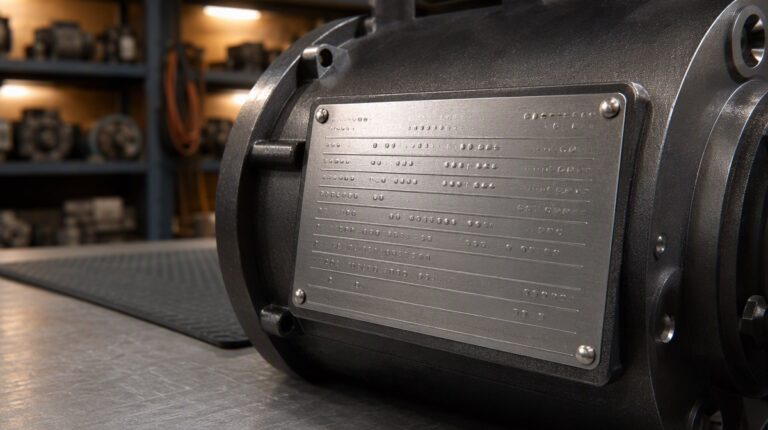
Start with the requirement and nameplate upload through Priority Technical Review. Motor-side faults land on our servo motor repair bench, where the mechanical and electrical splits are done in that order.