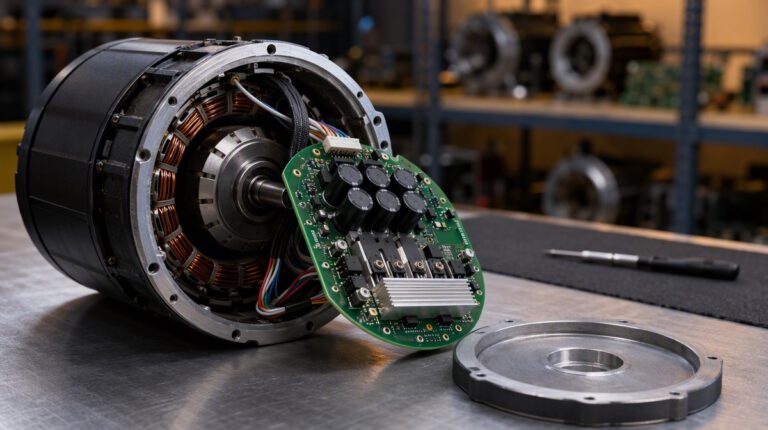
The servo brake will not hold — or will not release. That is not the motor.
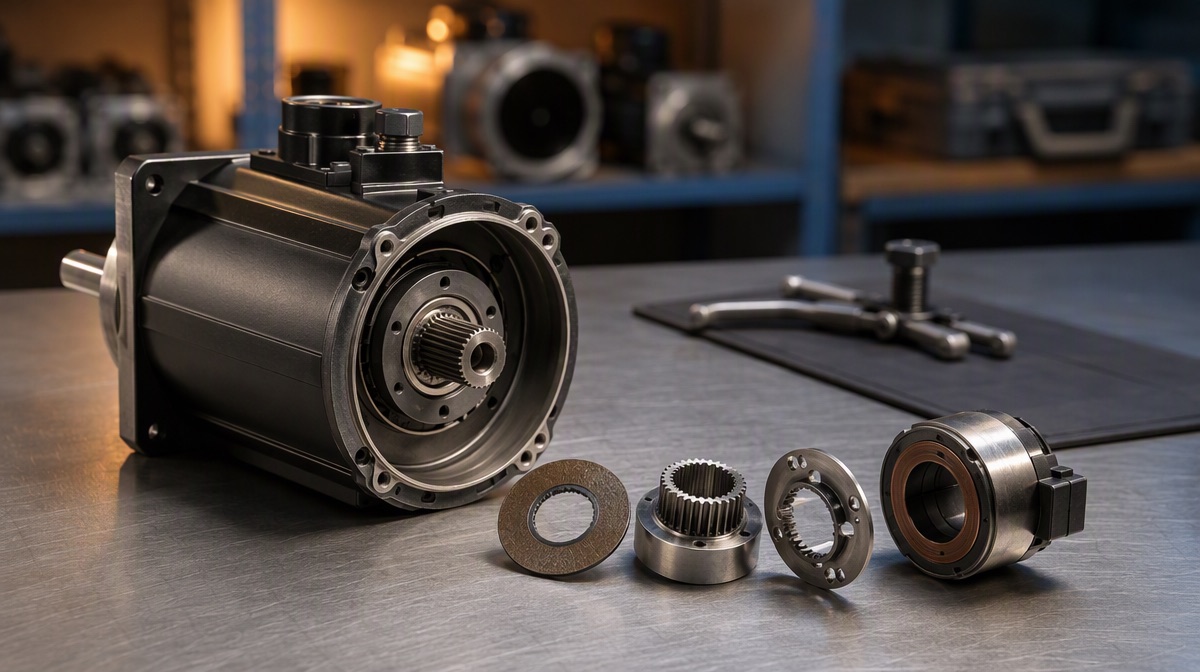
The brake is a separate assembly from the motor, and it fails in two opposite directions. A brake that will not release makes the motor fight itself. A brake that will not hold lets a vertical axis drift. Both arrive at the maintenance desk described as a motor problem.
A brake that will not release
When the brake stays applied, the motor is commanded to move against a locked shaft. Current climbs, the housing heats, and the drive eventually trips on overload.
The winding is the victim here, not the cause. If the brake is not checked first, the repair starts in the wrong place.
A brake that will not hold
The other direction is a safety question. An axis that drifts with enable off, or sags when the drive is disabled, is usually a brake that is not holding rather than an amplifier that has lost control.
On a vertical axis this is the fault that must be taken seriously before anything else is investigated.
Vertical axis risk comes first
Before any test, the mechanical risk has to be managed. An axis that can fall when the brake is released should be supported, blocked or otherwise secured, and the test done with that arrangement in place.
The electrical question is interesting. The falling load is not.
Coil, or mechanical seize?
Once the axis is safe, the brake splits into two possibilities:
- Coil or supply. The brake does not get the command or the current it needs to release.
- Mechanical seize. The brake gets what it needs and still does not move — contamination, wear, or a mechanism that has stopped travelling.
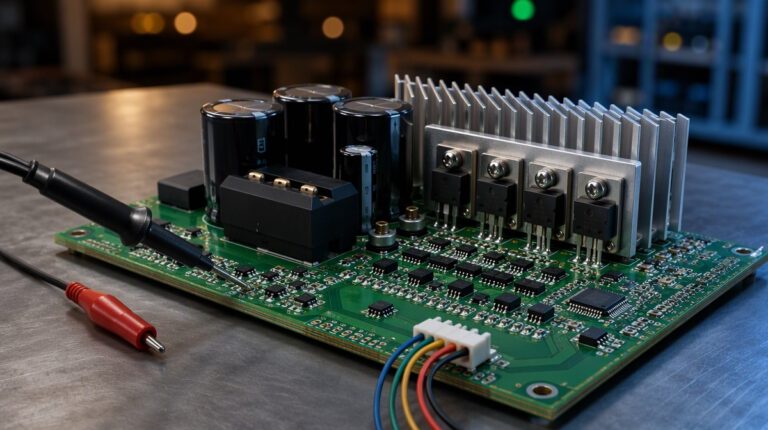
Check release when commanded, check hold when dropped, and only then test the coil. That order separates the electrical fault from the mechanical one.
Do not start with a rewind
A rewind on a motor that has been running against a locked brake returns a motor that is about to be cooked again. Prove the brake first, then assess the winding.
If the motor did run against a locked brake, the winding check is still worth doing — but it comes second, as confirmation rather than as diagnosis.
Servo brake faults — direct answers
How does a brake fault look like a motor fault?
A brake that stays applied makes the motor fight itself. Current and temperature rise. The winding is the victim.
How does a brake fault look like a drive fault?
A vertical axis that drifts with enable off is often the brake, not the amplifier.
What is checked first?
Whether the brake releases when commanded, and whether it holds when dropped. Then the coil.
Can the motor still be damaged?
Yes, if it ran against a locked brake. Check windings after the brake is proven.
What should we send?
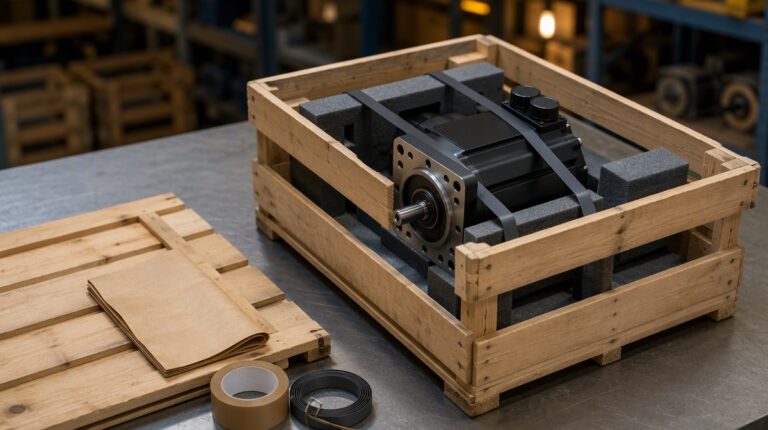
The motor, whether the axis is vertical, and whether you heard the brake click.
Tell us if the axis is vertical
That one detail changes the order of work and the safety setup. The same is true of the brake click — an audible click when commanded tells us the coil is being driven, even if the brake does not move.
Start with the requirement and nameplate upload through Priority Technical Review. Brake and winding work lands on the same bench as our servo motor repair work, which is where the brake is separated from the motor before anyone quotes a rewind.