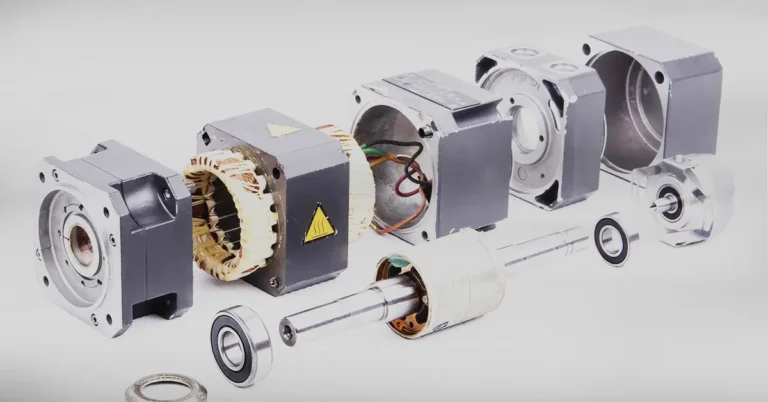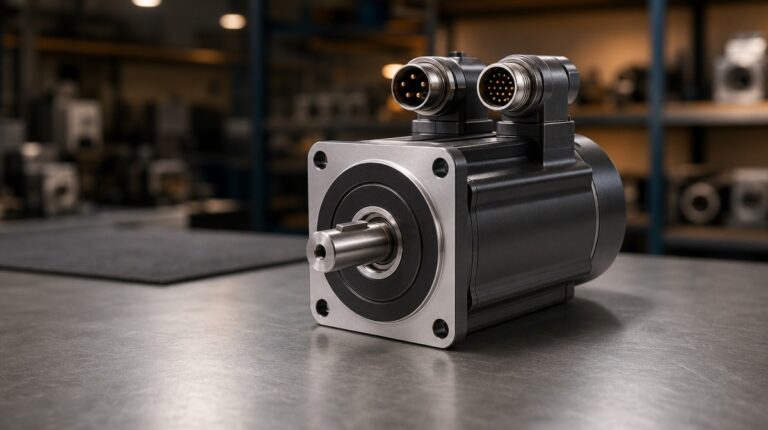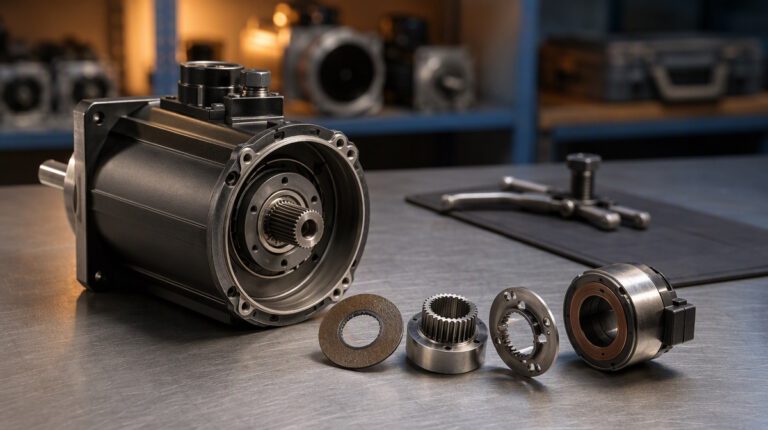
Send the motor to a depot, or swap it in the field?
Two questions decide this, and neither is about preference. Is a tested spare already on the shelf? And does the fault need work that cannot be done at the machine? Answer those and the route picks itself.
Field swap is a speed decision
Swap in the field when a tested spare exists and the machine cannot wait for a crate. Downtime is the cost being managed, and a unit on the shelf is the fastest way to cut it.
The failed unit does not disappear in that case. It comes back with a fault note, and the depot work starts from what the site observed.
When the fault needs a bench
Some faults do not resolve at the machine, however good the technician standing there:
- Electronics faults that need in-circuit measurement
- Feedback alignment that needs the unit spinning under control
- A rotating-assembly accept test
That work needs instruments, a controlled supply and a place to run the unit. It does not ride in a van.
Both routes on one event
The two are not rivals. A common sequence: diagnose at the site, fit the spare to release the machine, ship the failed module to the depot, and let the repaired unit become the next spare.
The owner keeps the serial record either way. That record is what stops a repaired unit being confused with a new one later.
A machine that cannot move
When the machine cannot be stopped long enough for a swap, the work changes shape. Diagnose on site to establish what is actually failed, then take only the failed module out of the line.
That keeps the intervention small. It also avoids shipping a complete assembly when a board or a feedback device was the whole problem.
What depot work actually includes
Bench work is a sequence, and the release depends on it:
- In-circuit testing to find the failed stage
- Component work to published assembly practice
- Balance and mechanical checks on the rotating assembly
- A dielectric protocol appropriate to the unit
- A serialized report of what was measured
A field force with no board-level cell still needs a depot behind it. Otherwise the same fault returns on the next unit with no diagnosis attached.
Depot or field — direct answers
When is field swap the right first move?
When a tested spare is on the shelf and the machine cannot wait for a crate.
When does the unit need a depot?
When the fault is electronics, feedback alignment, or a rotating-assembly accept test. That work does not ride in a van.
Can both be used on one event?
Yes. Diagnose on site, ship the failed module, keep the spare running. The owner keeps the serial record.
What does a depot release include?
What failed, what was replaced, and the measurements that allowed the unit back into service.
What should we send?
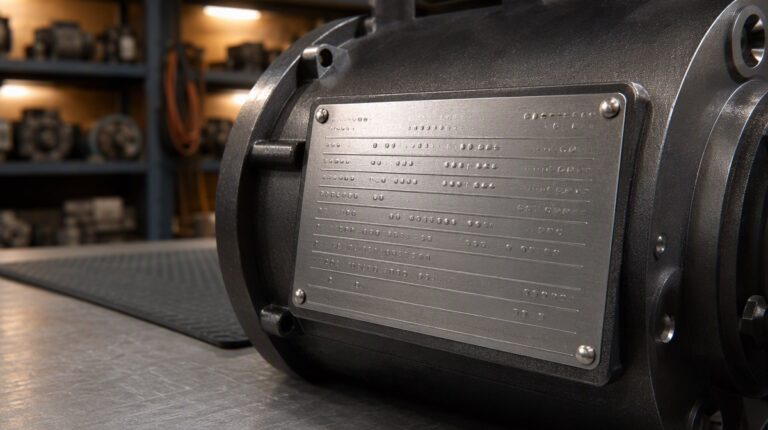
The unit as received, the fault as seen on site, and the nameplate. Say if a spare is already running in its place.
Tell us what the site already saw
The fault as it appeared on site is the most useful thing you can send with the unit. It tells us whether we are looking for a fault that is present on the bench, or one that only appears under load.
Start with the requirement and nameplate upload through Priority Technical Review. Units that arrive for bench work are handled on the same floor as our servo motor repair work.