
Subtotal ₹0.00
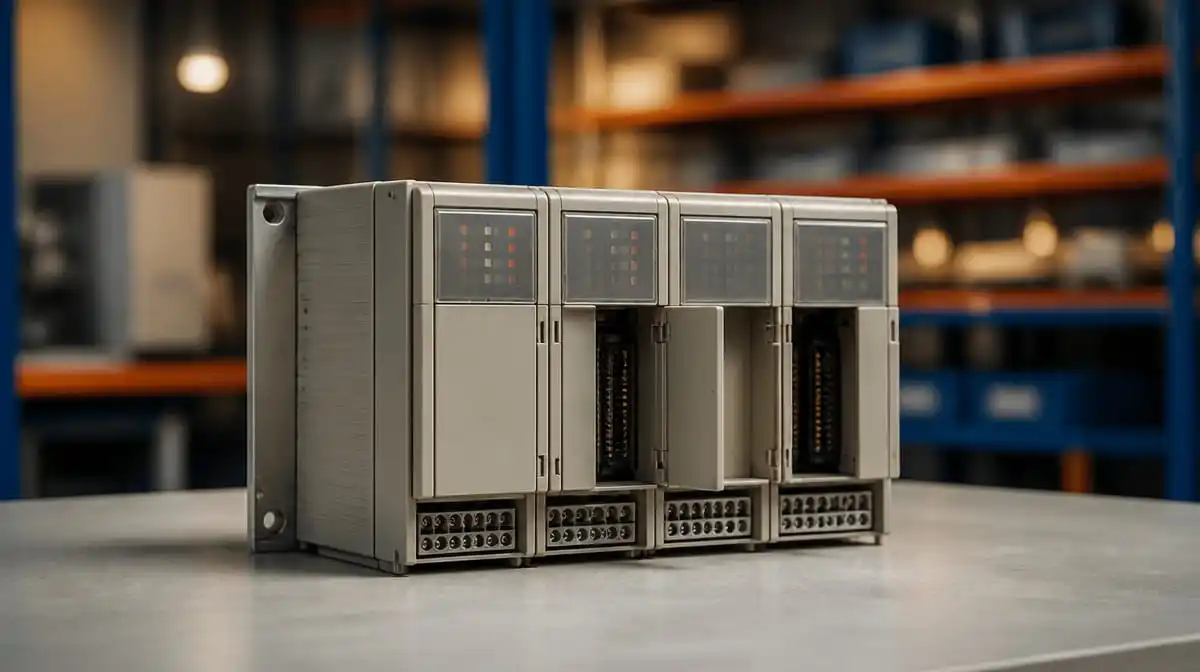
Allen-Bradley’s SLC 500 platform is one of the most widely deployed PLC families ever built — and one of the largest installed bases still running today despite being long discontinued. If your line depends on a 1747-series processor, the practical question isn’t whether the platform is old. It’s whether the specific catalog number on your rack can still be found in 2026, and whether it’s the right one before you buy.
What the SLC 500 (1747 series) actually is
The Allen-Bradley SLC 500 is a modular PLC platform built around 1747-series processors — including the 1747-L5xx / SLC 5/05 range — paired with 1746-series I/O modules, chassis, and power supplies. A very large installed base remains in service worldwide simply because machines were built around this platform and continue to run in production.
Why sourcing is harder now, not just “old”
Industry reporting through 2026 has been consistent on one point: sourcing obsolete PLC components has moved from being an occasional logistics inconvenience to a genuine operational risk. Even a single failed module can now halt production while a replacement is located. Reported factors behind this shift include component-level supply pressure — one industry source (Central Surplus, dated 24 Aug 2026) points to a sharp jump in DRAM memory pricing this year as automation-grade memory components get squeezed by unrelated demand elsewhere in electronics manufacturing — plus the ordinary reality that no one is manufacturing new SLC 500 hardware.
Separately, a 2025 sourcing guide (Enicstra) notes that counterfeit components are an industry-wide risk for discontinued industrial parts, given the premium pricing and limited supply that make older automation parts an attractive counterfeiting target. That risk is a sourcing consideration, not a reason to avoid sourcing — it’s a reason to verify what you’re buying.
Why the exact catalog number matters more than “SLC 500”
“An SLC 500 processor” is not enough information to source correctly. Revision level, firmware compatibility, terminal block style, memory type, communication protocol, and rack configuration can all differ between units that look similar on the shelf. Buyers who source by exact part number — then verify against the machine’s own documentation and existing hardware — avoid the most common and costly sourcing mistakes on this platform.
Before requesting a quote, capture from the unit itself:
- The full processor catalog number exactly as printed (e.g. within the 1747-L5xx / SLC 5/05 range)
- Firmware or series revision, where printed on a label
- The associated 1746-series I/O modules, chassis, and power supply catalog numbers actually installed
- Communication protocol/network cards fitted, if any
Three realistic routes for an SLC 500 system today
1. Repair the existing unit
If the fault is in a repairable area and the rest of the system is healthy, repair keeps your existing program, wiring, and I/O configuration completely unchanged — no requalification needed.
2. Source the exact same catalog number
This keeps the machine unchanged in every respect. It is the right first move when the line is critical, a migration window doesn’t exist yet, or you run multiple identical machines and want spares commonality. The honest limitation: availability depends entirely on what currently exists in the surplus and specialist market — no supplier can guarantee a date for a part that may not exist anywhere right now. Start the search before the unit actually fails.
3. Plan a migration to CompactLogix
When no verified replacement exists and repair is no longer viable, or the line is already scheduled for a control upgrade, migrating to a current-generation platform such as CompactLogix 5380 is the better long-term route — but it is an engineering project, not a swap.
SLC 500 sourcing — direct answers
Can I still buy new Allen-Bradley SLC 500 hardware?
No — the platform is discontinued. Available units come from surplus inventories, decommissioned plants, and specialist stockists, and supply for any given catalog number is never guaranteed.
What information do I need before requesting a sourcing quote?
The exact processor catalog number as printed, the associated 1746 I/O/chassis/power-supply catalog numbers actually installed, and any firmware/revision marking. A part number alone, without confirming these against your installed hardware, is not enough to guarantee compatibility.
Is it safer to repair or to source a replacement?
Repair first when the fault is repairable and you want zero disruption to program and wiring. Source an exact-model replacement when the unit itself is beyond repair but you’re not ready for a platform migration.
Running a Yaskawa Sigma-II servo drive on the same line?
See our companion article on Yaskawa SGDM/SGDH end-of-factory-support — the same repair-vs-source-vs-migrate logic applies.
What to send us
For a sourcing check on your exact SLC 500 catalog numbers, send the processor and I/O module numbers exactly as printed to Ask Star. Our Allen-Bradley SLC 500 (1747) sourcing & replacement support page has the current service scope for this platform.